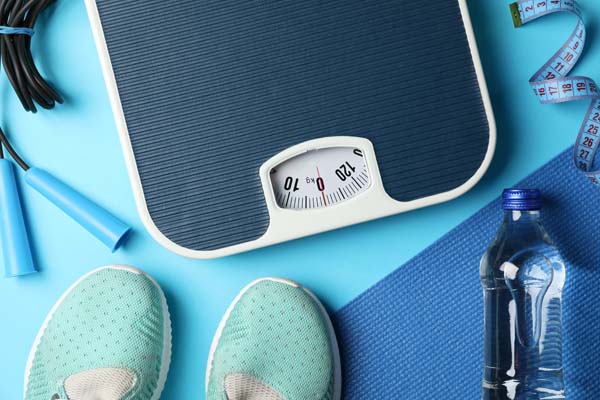
When trying to achieve a weight loss goal our lives tend to end up revolving around what that number on the scale says. Unfortunately, that number can seem barely to change, leading to frustration and often to the abandonment of our weight loss goal. However, understanding how to track weight loss progress involves much more than just body weight. That number can change very slowly, which often leads to frustration and, in many cases, abandoning the goal altogether.
The second way to track progress is through tracking body fat percentage. This is the ratio of the amount of fat to the amount of Lean Body Mass (LBM) one has in the body. LBM is essentially everything in the body that is not fat, like bones, muscles, and other organs. Your body fat percentage can usually be measured at a local fitness center. Measuring body fat during a weight loss program is important because fat is typically the weight we all want to lose. It is important to remember that comparing fat to muscle is like comparing feathers to bricks. Even though 1 pound of each is all the same weight, a pound of fat or feathers will take up much more space than a pound of bricks or muscle. Therefore a 5-10% drop in body fat even when maintaining the same weight can result in a drastic body composition change and often be the results we were looking for all along.
Another way to track progress is to measure the circumference of certain body areas. The waist is the most obvious, but you can also measure and track changes in your arms, hips, and legs. The key things to remember when measuring are to ensure the measuring tape follows a straight or level line and to measure in the exact same spot each time.
These are just two more ways to track your progress in a weight loss program. Keep on the lookout for the next installment, or make it easier by clicking the subscribe button at the top of the article.